Nowruz Invitations
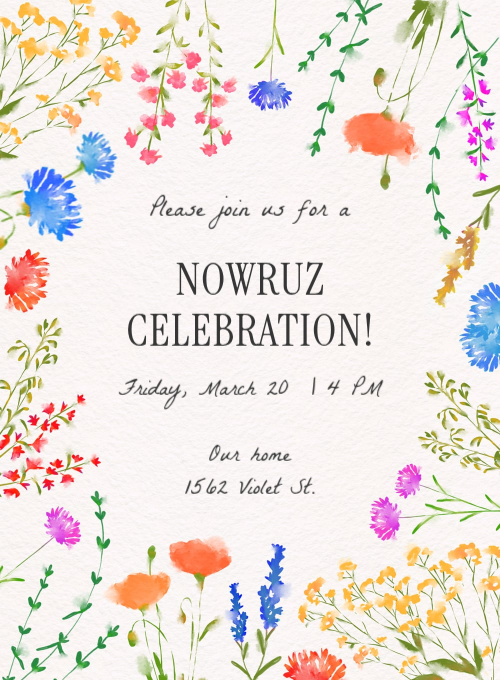
Nowruz is on Friday, March 20, 2026! Browse Evite's collection of Nowruz Invitations, then easily select and customize your invite and send it via text or email.

9 results


Frequently asked questions: Nowruz Invitations
Planning a Nowruz gathering comes with its own set of questions, from what belongs on the Haft-Sin (also spelled Haft-Seen) table to what to wear. Here's what hosts and guests ask most often.
What is Nowruz?
Nowruz marks the Persian New Year and the first day of spring. Millions of people across Iran, Central Asia, and the diaspora celebrate Nowruz each year.
The holiday centers on renewal. People do a deep spring cleaning of the home, friends and family gather around the Haft-Sin table, and everyone treats the days ahead as a fresh start. A Nowruz Invitation is the easiest way to set the date and let your guest list know the celebration is on.
What details should I include in my Nowruz invitation?
Ensure your invitation covers the basic details first. Include the event date, time, and venue address, plus an RSVP deadline so the headcount isn't a last-minute guess. From there, a few extra lines may offer your guests some clarity:
- Haft-Sin note. Let guests know whether you’re building it together or you’ve already set it up.
- Dish assignments. If it's a potluck-style spread, spell out who's bringing what.
- Recommended attire. A quick mention of the dress code (festive, colorful, casual) saves guests the guesswork. This is particularly helpful if your family celebrates the tradition of wearing something new.
What should I bring to a Nowruz party?
If the host hasn't assigned a dish, any Haft-Sin-friendly item will make a nice gesture. Sabzeh (sprouted wheat or beans), sweets like baklava or noghl, or fresh herbs and dried fruit are all excellent options. Beyond food, small, symbolic gifts go a long way:
- Tulips or hyacinths. A classic Nowruz gift that doubles as table decor once you arrive.
- A card for the host. Persian New Year greeting cards are a nice, personal touch.
- Tea. Most hosts will appreciate a nice box of loose-leaf Persian tea.
When is Nowruz celebrated each year?
Nowruz falls on the spring equinox, typically between March 19th and 21st. The exact time and day can shift slightly year to year, so it's worth confirming the date before sending your Nowruz invitation out.
What is the Haft-Sin table and how do I set one up?
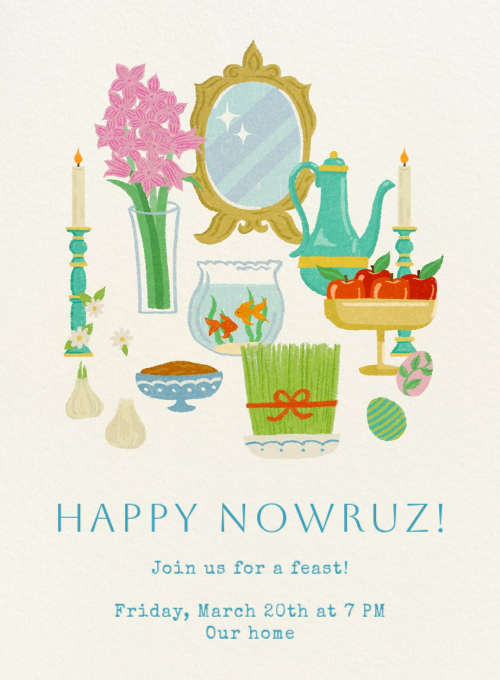
The Haft-Sin is a ceremonial spread of seven symbolic items, each starting with the Persian letter "seen" (S). That includes sabzeh (sprouts), samanu, senjed, seer (garlic), seeb (apple), somaq (sumac), and serkeh (vinegar).
Hosts often build the Haft-Sin table as the visual centerpiece of the Nowruz festivities. Some may also accent the table with a mirror, candles, or a goldfish for extra symbolism. A brief mention of the table on your invitation is a courteous detail so guests know what to expect and what they may add.
Start browsing Nowruz Invitations, or check out the Evite blog for more hosting tips.
For more holidays, check out Evite’s collection of invites for all holidays.